
A lower total is not automatically better value. Compare the work, materials and finishing included in each proposal first.
Compare the complete intervention
Compare quotations by room and by trade. Check that interfaces such as making good walls after service work are included exactly once, with clear responsibility.
Align the scope
Use the same headings for preparation, demolition, structure, installations and finishes. Mark missing items and distinguish fixed prices from provisional allowances.
Read the assumptions
Ask what provisional sums are based on and how final choices are reconciled. A low allowance lowers the quoted total without necessarily reducing the eventual cost.
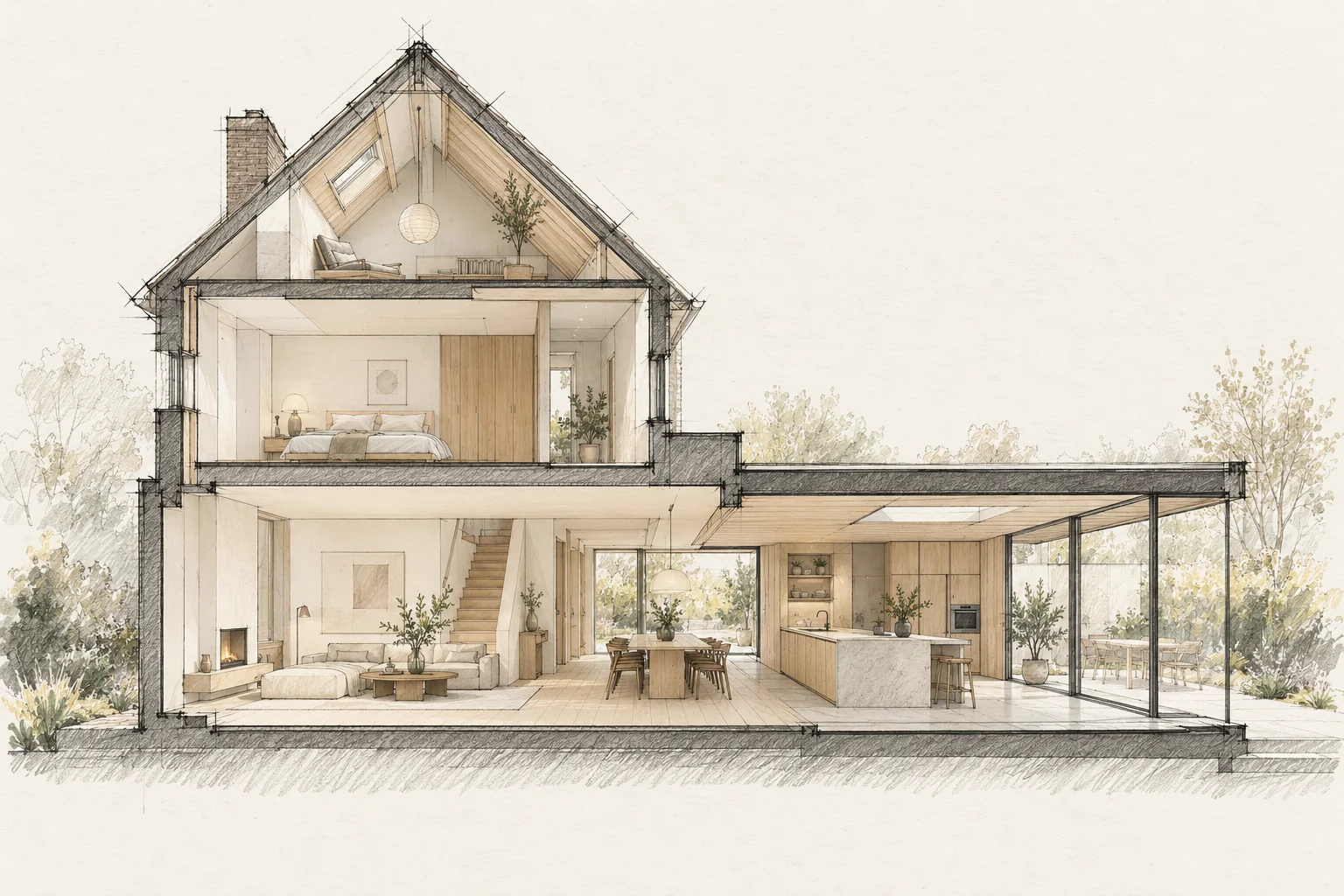
What the drawing needs to explain
Use the same room and detail numbers on drawings and in the room book. Identify the approved revision for each item and which supplier still needs to provide information.
Which trade-off matters?
A continuous material palette brings calm, but rooms serve different uses. Decide which qualities should remain consistent and where moisture, sound or intensive use calls for a different solution.
A situation to test your plan against
During a multi-room renovation, choices are often made supplier by supplier. A room book brings them back into one home: consistent names, dimensions and material agreements for every room. Conflicting assumptions then become visible earlier.
Questions for your own property
- Is the finish level equivalent?
- What is excluded?
- How are changes recorded?
Illustrative design situations, not evidence of completed work. Assess decisions against the actual property.